
Clinical Development Strategy
Each study conducted by a Sponsor should be designed to support an overall Clinical Development Strategy. ClinOps Specialists will support you to develop that strategy to ensure that you move from initial development to market or asset sale as quickly and smoothly as possible.
We will work with your internal team, Key Opinion Leaders and other stakeholders to agree your goals and plan the most efficient way to achieve them. A key driver of this process is the Target Product Profile (TPP).
A TPP outlines the desired ‘profile’ or characteristics of a target product that is aimed at a particular disease or diseases. TPPs state intended use, target populations and other desired attributes of products, including safety and efficacy-related characteristics. Such profiles can guide product research and development (R&D).
TPPs are used as planning tools that guide development towards desired characteristics.
Do the Right Studies at the Right Time.
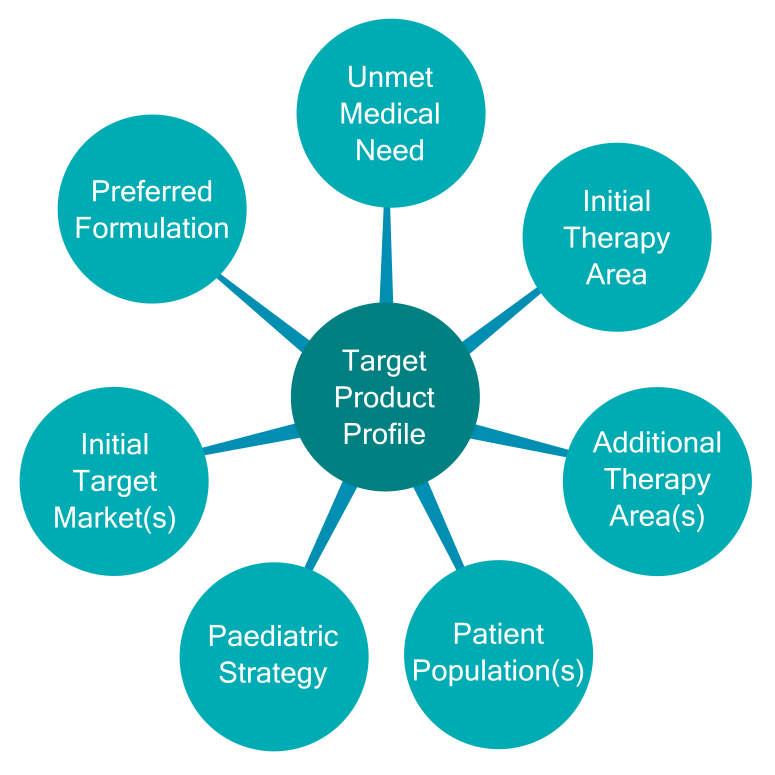
Clinical development strategy typically encompasses the following components:
Target Product Profile
- Expedite initial discussions regarding unmet medical need and therapy area(s)
- Support selection of initial therapy area
- Support selection of backup/following therapy areas
- Facilitate agreement of target patient population
Product Class
- Vary development approach depending on the class of the product under development
- First In Class (FIC) drugs are novel drugs that interact with a new target or treat a new condition.
- Best In Class (BIC) drugs aim to be superior to existing drugs in the same class.
- FIC drugs provide market exclusivity, while BIC drugs compete with similar drugs.
- FIC drugs may come with additional development risk due to an unknown safety profile
Market Selection
- Assist with identification of key product markets
- Explore how the selected market(s) will impact the choice of countries to be used for the clinical studies
- Identify whether additional studies may be needed for key markets (e.g., Japan requires data from Japanese subjects)
Regulatory Strategy
- Determine the impact of market selection on the program’s regulatory strategy
- Ensure awareness of differing regulatory requirements for US, UK/EU and other regions
- Consider requirements for studies in paediatric populations (Paediatric Investigation Plans for EU)
Non-Clinical Development
- Ensure that the development plan has key non-clinical data available at key points in the program
- Reproductive toxicology data may be required prior to including females of child-bearing potential into studies
- Long term toxicology data will be needed to support long term dosing in clinical studies
- Balance timing of data availability vs. cost of study conduct
Investigational Product Development
- Ensure development of the Active Pharmaceutical Ingredient (API) keeps pace with the requirements of non-clinical and clinical studies
- Provide insight on planning of the Investigational Product (IP) development
- Take timing of studies into account
- Initial studies may use a simple formulation, not suitable for market
- Development of the final IP should conclude prior to conduct of the pivotal studies